
If you’re an architect, you know the frustration of dealing with large-format drawings, blueprints, and technical plans. Rolling them up damages the paper, folding them creates permanent creases, and stacking them flat means you can never find what you need when a client calls. That’s where plan chests come in – and frankly, they’re not just helpful for architectural practices, they’re absolutely essential.
Let’s dive into why every architect should be investing in proper plan chest storage and how the right solution can transform your studio’s efficiency.
The Hidden Cost of Poor Drawing Storage
Most architects start their careers shoving plans into tubes or stacking them on shelves. It seems like a practical solution until you realise the real cost. Every time you roll a drawing, you’re creating stress points in the paper. Every time you fold it, you’re creating permanent damage. And every time you stack plans without proper support, you’re risking tears, creases, and that dreaded moment when a coffee spill destroys weeks of work.
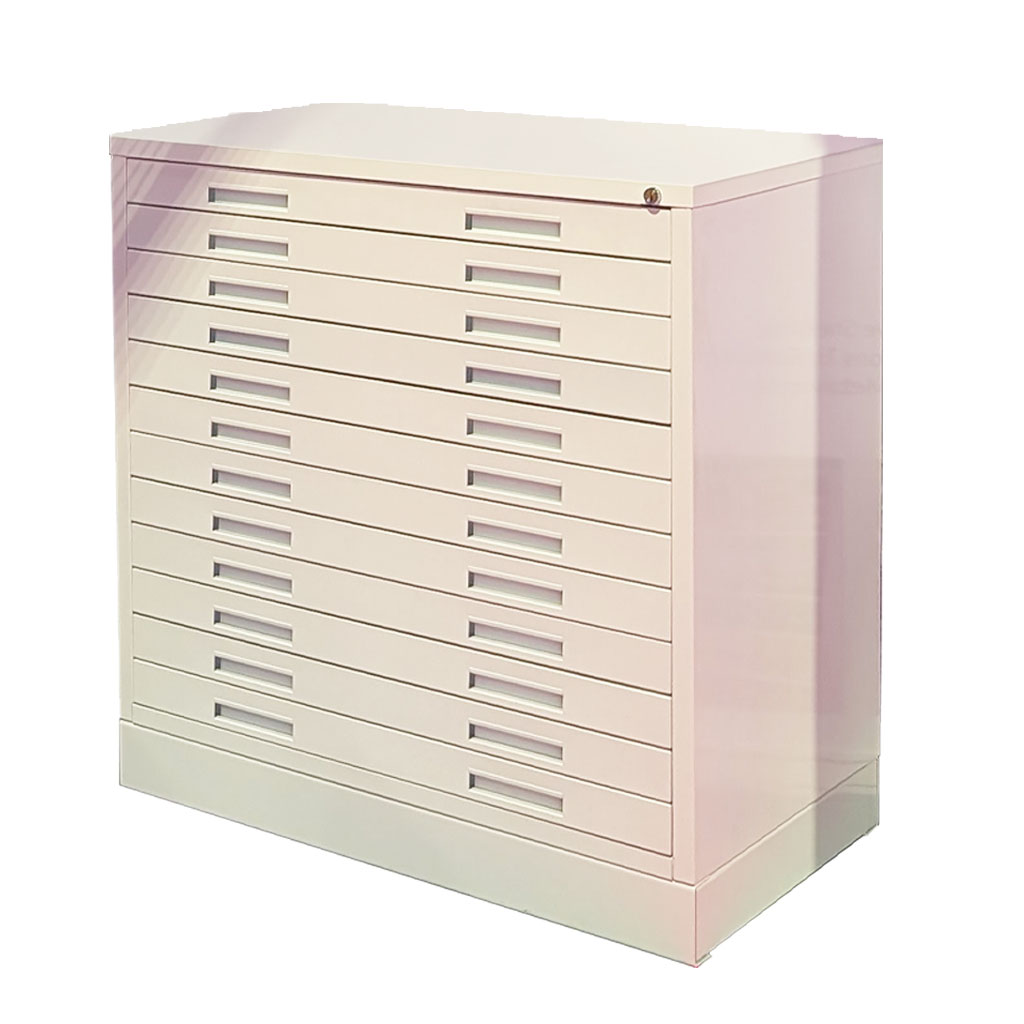
Plan chests solve this by storing your drawings completely flat in shallow drawers designed specifically for large-format documents. No rolling, no folding, no damage. Your technical drawings stay in pristine condition, ready for client presentations, planning submissions, or those inevitable last-minute changes.
Organisation That Actually Works
Think about your current system for storing drawings. Can you honestly say you can find any specific plan within two minutes? If you’re like most architects, the answer is probably no. Plan chests change that completely.
Each drawer in a plan chest typically holds around 50-100 drawings, depending on paper thickness. You can organise them by project, by drawing type, or by date – whatever system works for your practice. The shallow drawers mean you can see everything at a glance without having to lift heavy stacks of paper.
Here’s where it gets clever: most plan chests come with indexing systems. You can label each drawer and even create detailed contents lists. Suddenly, finding that structural detail from the Johnson project becomes a 30-second job instead of a 30-minute hunt.
Workflow Improvements You’ll Actually Notice
The difference in workflow efficiency is remarkable. When your drawings are properly organised and easily accessible, your entire design process becomes smoother. You can:
- Compare different versions of the same drawing without handling multiple rolled tubes
- Present options to clients by quickly pulling out alternatives from different drawers
- Coordinate with consultants by having structural, mechanical, and electrical drawings readily available
- Meet planning deadlines because you’re not wasting time searching for documents
At Rackline, we’ve worked with architectural practices across the UK, and the feedback is always the same – proper plan chest storage doesn’t just organise your drawings, it speeds up your entire project workflow.
Professional Presentation Matters
Let’s be honest – presentation matters in architecture. When a client visits your studio, what impression do they get? Rolled-up tubes scattered around the office don’t exactly scream “professional attention to detail.”
Plan chests give your workspace that organised, professional appearance that clients notice. More importantly, when you’re presenting drawings, you can lay them out flat without creases or curl marks. The drawings look crisp, professional, and demonstrate the care you take with your work.
For client meetings, you can quickly access multiple drawings and spread them out for discussion. No more unrolling tubes and trying to hold corners down with paperweights. Your drawings lie flat naturally, making it easier for clients to understand your designs and for you to explain technical details.
Space Efficiency in Modern Studios
Studio space is expensive, especially in city centres where many architectural practices operate. Plan chests are surprisingly space-efficient for the amount of storage they provide. A typical 6-drawer plan chest can store up to 600 A1 drawings in the same floor space that might otherwise hold a desk.
Modern plan chests also come in various configurations. You can choose tall, narrow units if you have limited floor space, or wide, low units if you prefer easier access to lower drawers. Some practices even use them as additional work surfaces – the flat tops make excellent spaces for laying out drawings during design sessions.
The Rackline Difference
At Rackline, we manufacture our plan chests right here in the UK to exacting standards. We’re not talking about flimsy imported furniture that falls apart after a year of professional use. Our plan chests are built to handle the daily demands of busy architectural practices.
Our steel construction means your investment will last decades, not years. We’ve had customers using the same plan chests for over 20 years – that’s thousands of drawings stored, accessed, and protected without the unit showing any signs of wear.
The smooth-running drawers are designed for frequent use. They glide open easily even when fully loaded, and the drawer stops prevent accidental over-extension that could damage your drawings or the unit itself.
Custom Solutions for Unique Needs
Not every architectural practice has the same storage requirements. Some specialise in large commercial projects with massive drawing sets. Others focus on residential work with smaller, more varied drawing sizes. Some practices work primarily in A1 format, while others need to accommodate everything from A4 details to A0 site plans.
That’s why we offer custom sizing and configurations. Need extra-deep drawers for thick presentation materials? We can do that. Want a specific height to fit under a sloped ceiling? No problem. Need a particular finish to match your office interior? We offer various powder-coated finishes to complement any workspace.
We also understand that some practices need secure storage. Our plan chests can be fitted with locking mechanisms, giving you peace of mind for sensitive or confidential project drawings.
Beyond Drawings: Versatile Storage Solutions
While plan chests are perfect for architectural drawings, they’re also incredibly useful for storing other large-format materials. Many of our architect clients use them for:
- Presentation boards and mounting materials
- Artwork and renderings for client presentations
- Historical plans and archive materials
- Sample materials like fabric swatches or finish samples
- Project photographs and visual references
The flat storage keeps everything in perfect condition, whether it’s a delicate watercolour rendering or a collection of material samples for a specific project.
Making the Investment
Quality plan chests are an investment, but when you consider the cost of recreating damaged drawings or the time wasted searching for misplaced plans, they quickly pay for themselves. More importantly, they’re built to last. A good plan chest isn’t something you’ll need to replace – it’s storage that will serve your practice for decades.
Think about it this way: if you spend £1,500 on a plan chest that lasts 20 years, that’s less than £75 per year to properly protect and organise hundreds of thousands of pounds worth of architectural work.
Getting Started
If you’re ready to transform how your architectural practice stores and accesses drawings, the first step is assessing your current storage needs. How many drawings do you typically have active at any one time? What’s your primary drawing size? Do you need secure storage for sensitive projects?
At Rackline, we’re happy to discuss your specific requirements and recommend the right plan chest configuration for your practice. Our team understands the unique challenges architects face, and we can suggest solutions that fit both your storage needs and your workspace constraints.
Whether you’re a sole practitioner working from a home studio or a large practice with multiple offices, proper plan chest storage isn’t a luxury – it’s essential equipment for any serious architectural practice.
Ready to upgrade your drawing storage? See our dedicated Architects page here. Talk to our team on 01782 770144, email us at: info@rackline.co.uk or fill the form below and our team will be in touch.